Narcissist Lie Detector Deck: Detect The Lie, Uncover The Truth
Manipulation-proof Your Mind, One Card At A Time

Hello fellow narcissistic survivor!
I’m George Watts, a narcissistic survivor, creator of the Surviving Narcissism Deck, and BWY qualified yoga teacher. This deck is your self-paced, Surviving Narcissism Toolkit for detecting manipulation—one lie at a time.
Before I chat to you about this deck, is it just me, or am I the only one having this dream…
I Have A Recurring Dream Where All Narcissists Have A Big Yellow, “Beware Sign” On Them Saying This…

If only real life came with narcissist warning labels.
As a survivor of narcissistic abuse, I know just how subtle — and soul-crushing — narcissistic lies can be. They don’t just bend the truth. They twist reality. They make you question your memories, your feelings, even your sanity.
I spent years tangled in that confusion. And I created the Narcissist Lie Detector Deck to help you untangle yourself.
This 36-card deck is your personal lie detector — designed to reveal what the narcissist says versus what they really mean. Each card breaks down a manipulative phrase, explains why it’s harmful, and gives you a grounded, empowering truth to hold on to.
Creating this deck was personal, painful, but healing.
Each card is a small act of rebellion against gaslighting — a tool to help you trust your reality again.
You’re not too sensitive.
You’re not making it up.
You’re not overreacting.
You’ve just been lied to. A lot.
Narcissist Lie Detector Card Layout

Each Narcissist Lie Detector Card includes:
- Card Number & Category: Each card belongs to one of three trauma-informed categories — Reality Distortion, Emotional Sabotage, or Power Plays. Each category is colour-coded and numbered for easy sorting and progression.
- The Narcissistic Lie (Card Title): A classic phrase narcissists use to manipulate, deflect, or distort. These are the sentences you’ve heard a thousand times — now decoded.
- Breakdown Of The Narcissist Lie (“What They Really Mean”): A powerful mini-explainer that reveals the hidden manipulation behind the phrase — written in clear, accessible language with trauma-aware insight. Always starts with: “The narcissist’s phrase…”
- Healing Affirmation: Each card ends with a counter-statement — an empowering truth you can repeat to reset your nervous system and rebuild your reality.
- Therapeutic Design Aesthetic: Minimalist, clear, and calming — intentionally designed to be gentle on the eyes and the nervous system.
Take A Silent Sneak Peek At All 36 Cards Within The Deck
Here’s a silent video showing all 36 cards in the deck…
Hope you enjoyed the silent video!
Let’s talk card flavours….
These Are The 3 Card Flavours (Categories) Within The Deck

The Narcissist Lie Detector Deck is divided into three colour-coded categories, each revealing a specific pattern of manipulation that narcissists use to confuse, control, and exhaust you.
Every card exposes a common phrase used by narcissists, explains what it really means, and offers a grounded affirmation to help you reclaim your truth.
This deck is a decoding tool — helping you spot the lies, reverse the confusion, and rebuild your confidence, one card at a time.
Card Category 1.
Reality Distortion (12 Blue Cards)
This category reveals how narcissists twist facts, shift blame, and rewrite events to make you doubt your reality. Recognising these distortions helps you stay grounded in your truth and resist their manipulative grip.
Some of the cards in this category include:
- “You’re Too Sensitive” – A classic gaslighting tactic used to dismiss your emotions and make you question your own reactions. This card reminds you that your feelings are valid signals, not flaws.
- “That Never Happened” – An outright denial of reality. The narcissist uses this phrase to erase your experiences, but this card brings clarity — you are not imagining things.
- “You’re Overthinking Everything” – A subtle way of shutting down your concerns. This card helps you honour your intuition and trust that your thoughts matter.
Card Category 2.
Emotional Sabotage (12 Green Cards)

This category exposes how narcissists weaponise guilt, fear, and shame to erode your self-worth and keep you emotionally dependent. By decoding these tactics, you’ll be better equipped to protect your heart and honour your boundaries.
Some of the cards in this category include:
- “You Made Me Do It” – A blame-shifting tactic that turns their toxic behaviour into your fault. This card helps you release false guilt and remember: their choices are not your responsibility.
- “I’m Sorry You Feel That Way” – A non-apology disguised as empathy. This card calls it out for what it is — avoidance of accountability — and affirms your right to genuine care.
- “Why Are You Doing This to Me?” – An emotional trap designed to make you feel like the villain. This card reminds you not to confuse manipulation with concern.
Card Category 3.
Power Plays (12 Red Cards)

This category uncovers how narcissists control your relationships, isolate you, and reel you back in with promises and guilt trips. These cards will help you see through the manipulation and rebuild your autonomy.
Some of the cards in this category include:
- “Who Were You With?” – Disguised as concern, this question is often about control and surveillance. This card helps you differentiate love from possession.
- “If You Loved Me, You’d…” – An ultimatum dressed as romance. This card teaches you how to spot emotional blackmail and stand your ground.
- “I’ve Changed, I Promise” – A classic hoovering line to pull you back in. This card equips you with clarity — real change requires consistent action, not empty words.
Who Is The Surviving Narcissism Card Deck For
This deck is perfect for:
- Survivors of narcissistic abuse looking for practical tools to aid their healing.
- Therapists and counsellors who want to offer clients a valuable resource for self-reflection and recovery.
- Anyone struggling to set boundaries or reclaim their sense of self after dealing with toxic relationships.
Whether you’re just starting to recognise the signs of narcissistic abuse or are deep into your healing process, the Surviving Narcissism Card Deck offers ongoing support and guidance, one card at a time.
How To Use The Narcissist Lie Detector Deck
You don’t have to use all the cards at once.
Take them one day at a time.
Maybe pull a card in the morning for guidance or at night for reflection. Let each message sink in and allow yourself to feel whatever comes up. Healing isn’t a linear path—it’s messy and emotional—but each card is designed to support you wherever you are on your journey.
If you’re a therapist, you can use the cards in your sessions to facilitate deeper conversations about your progress and challenges.
Why Choose The Surviving Narcissism Card Deck?
Why choose this deck:
Expertly Designed
Created by an experienced yoga therapy professional who understands the complexities of narcissistic abuse and recovery.
Portable & Practical
Keep it on your nightstand, in your purse, or at your desk—accessible whenever you need a moment of empowerment.
A Lifelong Tool
This deck isn’t just for immediate healing; it’s a long-term resource to guide you through various stages of recovery.
Swipe Right For Healing: Explore on Any Device
Unlock the magic of the Narcissist Lie Detector Deck by accessing the PDF on your iPad, Tablet, or Phone. Dive into your digital healing journey—just download the PDF, sit back, and swipe through each card. It’s like having a therapist in your pocket.
Bonus Bliss: Yin Yang Yoga Lesson Plan Bundle
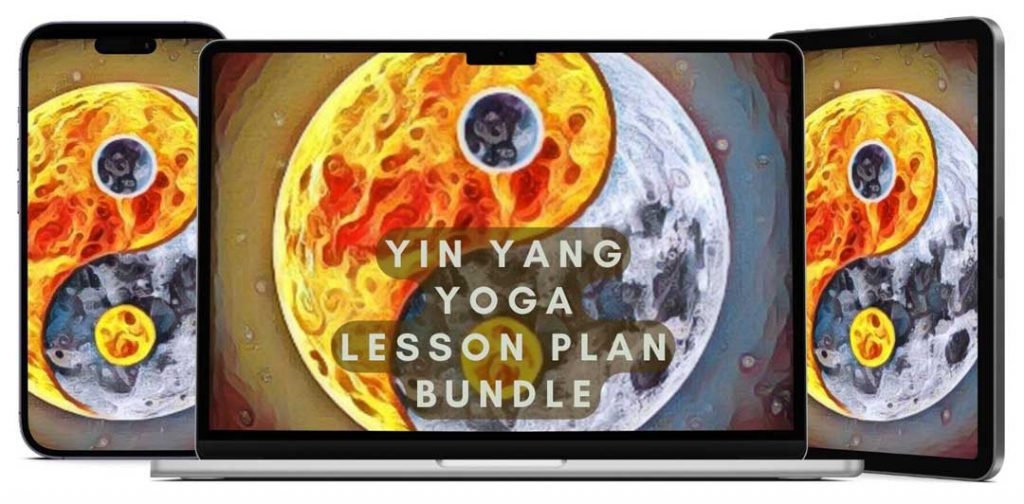
With this bonus, I will give you the Yin Yang yoga lesson plan bundle that I created for my yoga students.
When the Yin and Yang of your body are in disharmony, it’s like trying to ride a unicycle with the spokes of the wheel short on one side and long on the other. The hub is out of centre and your ride is very bumpy. If you continue for long, you’ll break the wheel and perhaps the bike. And if your body continues in disharmony for long, illness shows up.
Yin Yoga Benefits
- Calming and balancing for the mind and body
- Regulates energy in the body
- Increases mobility in the body (especially joints and hips)
- Lowering stress levels
- Greater stamina
- Better lubrication and protection of joints
- More flexibility in joints & connective tissue
- Release of fascia throughout the body
- Help with migraines
- Deeper relaxation than yang yoga
- Deeper stretch than yang yoga
- Better ability to sit for meditation
- Slowing down allows time to connect with emotions
- Targets deep connective tissues (vs. the superficial tissues)
- Helps reduce addictive behaviours
- Helps reduce deep emotional pain
- Become still
- Come face to face with yourself
- Releases stuck areas with a joint (hips, sacrum, spine)
- The more relaxed you are in a pose, the deeper the stretch
- Time spent in yin poses is like time spent in meditation
- Yin yoga has been around for thousands of years
- Ancient yogis used yin postures to help promote meditation
Yang Yoga Benefits
- Boosts immune system
- sweet expels toxins
- Detoxify through skin, blood, liver and lungs
- Re-energising
- Synchronised breathing relaxes the mind
- Release any blockage of energy flow throughout body
- Feels like a dance
- Mind becomes quiet
- More energy
A regular yoga practice helps to reconnect with your body (see card 27: reconnect with your body).
What Are Others Saying About The Deck
“This deck was like handing my confused brain a flashlight. Every card helped me see through the fog of gaslighting and guilt-tripping. I kept saying, ‘Oh wow, THAT’S what that meant?!’ It’s now my go-to tool when I need a reality check.” — Sophie R, Narcissist Survivor
“I started with George’s Surviving Narcissism Deck a few months ago, which helped me rebuild my confidence and sanity. This Lie Detector Deck breaks down the exact lies I used to fall for and explains what was really going on. I wish I’d had these cards years ago. They’re like emotional armour!”— Sarah J, Narcissist Survivor
Here’s What You’ll Get
Here’s what you’ll get:
- A high-quality PDF of all 36 cards, to view on a device (e.g. your phone).
- A high-quality Printable PDF of all 36 cards.
- The 36 cards in JPG format—perfect for your digital collection.
- The 36 cards in PNG format—because who doesn’t love options?
- A helpful guide on using the cards.
- A 4-minute video demonstrating how to print the deck.
Digital Download
After purchasing, you’ll be whisked away to SurvivingNarcissism.co.uk and your very own “Account” page. Click “Download Files” next to your order—go ahead, go wild! Download as many times as you want, whenever you want. Your files will be patiently waiting on the “Your Account” page, ready for action.
Printing
You can print the cards from your printer at home or send them to a local or online printer to print (you’ll only need to print 11 pages).
Terms Of Use
These files are for your personal use only. Therapists, feel free to sprinkle them into your sessions, but remember: no selling, no reselling, and no giving them away like it’s Christmas. Keep the good karma going! If your clients start eyeing your cards, just tell them to grab their own deck here.
Surviving Narcissism FAQs

What are the top 12 warning signs that my mother or father is a narcissist?
If you think you were raised by a narcissistic parent here are some warning signs to look for:
- 99% of the conversation is about themselves (their favourite subject)
- Immature behaviour
- Selfish behaviour
- Brags about your achievements to others, but almost never supports you emotionally
- Constantly blames others for problems that stem from their behaviour
- Well-liked and/or important to others, but controlling and manipulative when no one is looking
- Makes you feel bad for not doing what they want immediately
- Makes you feel guilty by boasting about how much they have done for you
- Ruthless – doing anything to be and stay on top
- Unforgiving
- Makes you feel anxious
- Sabotages your confidence
What are the 7 most common traits of adult children who grew up with narcissistic parents?
1. Guilt
Adult children of narcissistic parents fear that they will hurt someone else by choosing to do what’s right for them. They have been trained to consider their parent’s needs first and foremost, and it is therefore hard for them to consider their own needs without feeling selfish for doing so. This guilt and indecision can be all-consuming for years.
2. Low Self-esteem
Gaslighting is a form of manipulation in which the parent will covertly sow seeds of doubt in their child, making them question their own memory, perception, or judgement. A classic example is when the narcissist blatantly lies so that you’re not sure in the future what is true and what is not. Another classic narcissist ruse is when the parent denies an experience from the past ever took place, invalidating the child’s feelings about the event.
Growing up with a narcissistic parent can leave the adult child feeling that they have very little to offer, even when the contrary may be true. Growing up, their talents and skills may have been downplayed, ignored, or co-opted by the narcissistic parent who will have felt threatened by their child’s skills. Even when a survivor of narcissism experiences success, they can feel that they don’t deserve it which may give rise to impostor syndrome.
3. Get Into Other Relationships With Narcissists
Even after growing up amid lies, manipulation, and abuse, it can be really difficult for adult children of narcissists to step away from caring for and loving a narcissistic parent. They will likely feel guilt for trying to step away or build boundaries, and may even enter into relationships with partners who show narcissistic traits. Love based on manipulations and conditions is something that is known to them, whereas unconditional love might seem daunting.
4. Compassion For Others
Most adult children of narcissistic parents display a great ability to show compassion and love for others, are able to form loving relationships, and learn to love and care for themselves. It is possible to recover from growing up with a narcissistic parent.
5. Self-Blame
A narcissistic parent is always emotionally tone-deaf, and are constantly preoccupied with themselves to be aware of the emotional needs of their child. In order to try to maintain the family unit, the child (even as an adult) shies away from blaming their parent and instead takes all the blame on themselves. The mantra going on inside their heads is: “If I was better at XYZ my dad/mum would love me.”
This can continue into adulthood, where the adult child continues to take the blame for things that aren’t always their fault. They become the scapegoat in many situations to keep the peace.
6. Fear Taking Any Attention Away From The Narcissist
Narcissistic parents can explode into anger or burst into tears without much warning, which forces their children to take up as little space as possible in order to avoid triggering one of these emotional outbursts (and also fearing taking any attention away from the narcissist in the process). It can feel like walking on eggshells – trying to do everything possible to avoid their parent having a meltdown.
7. Insecure Attachment To The Narcissist Parent
Adult children of narcissists are prone to become insecurely attached to their parent, which prevents them from a healthy exploration of their environment. My brother is four years older than me. When I was 18 and was contemplating going to University in America (I lived in the UK) he told me: “Great idea. Get as far away from XYZ (our narcissist parent) as you can.” Thankfully, I took his advice but was made to feel guilty every time I called or returned in the Summer months to visit.
The neglect, manipulation, or emotional absence of a parent can leave their child questioning how safe they will be able to feel in other people’s hands. This leads some adults to become fiercely independent, not trusting that anyone else can be relied upon. It can, however, lead others to cling to their partners for love and demand the attention of their significant other at all times.
What is a parentified child?
Children who grow up with a narcissistic parent will have organised their whole life and personality around the happiness of their parent, and will then grow up organising their life around the happiness of others – many of them working in the helping profession.
Do narcissist live vicariously through their child?
Yes. Narcissists love nothing more than living vicariously through their children.
For example, my brother was a top-ranked professional golfer. Our narcissist parent basked in the glow of his success because it made him look great to strangers. Those of us on the inside (close family members) knew very well that any “help” that was given to my brother was purely to inflate the narcissist’s grandiose sense of self.
To this day my brother and family members are constantly reminded of all the help and sacrifice given by the narcissist. It’s like listening to a broken record. Narcissists constantly embellish and exaggerate the help they give.
They do this to fish for admiration.
Why are narcissists threatened by your differences?
If you think differently or interpret something differently to a narcissist, they will take offence to it.
If you don’t think and act like them, they will be threatened by you. It’s because the narcissist has no empathy. They simply don’t ever see life from another person’s perspective – getting psychologically into someone else’s shoes is a no-no for a narcissist.
They have zero curiosity about you and how you feel. If you dare to be different in any way from a narcissist, it means they are no longer the centre of the Universe which is a psychological death for them.
Why do narcissists create so many enemies?
If you think differently or interpret something differently to a narcissist, they will take offence to it, and it will turn into an adversarial interaction very unnecessarily. They are experts at turning any issue into a “right or wrong” mentality.
They crave being correct and superior at all times. They have no capacity to collaborate. That is why a narcissist can’t help but see enemies everywhere they look. If you’re not willing to be an exact clone of them, then you are an enemy.
Don’t be drawn into the fight with them!
That’s exactly what they want you to do. You’ll never win a fight with a narcissist. You will always be wrong. They are empty people and the way they temporarily fill that void is by fighting, moodiness, tantrums, and petty arguments.
Why do narcissists have zero introspection abilities?
Narcissists go so deep into their alternate reality that when you come along and say: “Let us think things through a bit differently,” they will say: “No, my mind is already made up, and if there’s a problem between you and me then you’re the problem.”
They go deep into blame, accusing and forceful mode if you dare to think and act differently from them. Your differences will trigger their exploitation, manipulation and control mode.
Do narcissists view relationships as a hierarchy?
Yes!
Instead of looking at relationships as a collaborative (equal to equal) engagement, a narcissist looks at relationships as a hierarchy.
They think of “who is above” and “who is below” in this relationship. And you’ve guessed it, they want to be “above”. They always want to be the top dog. They don’t value differences and uniqueness.
They value power and control over others.
Do narcissists know how to be friends?
No!
Unless you become a clone of them, but that isn’t friendship. That’s an unhealthy co-dependency. They simply don’t know how to be friends.
Friends have the mindset of bringing their pluses and minuses to the equation and figure out how to accept, encourage, and accommodate one another in a healthy uplifting way. That kind of thinking is lost on a narcissist.
They have a long history of people not liking them (except for strangers who they go all out to impress), and they’re constantly trying to rationalise as to why it can’t possibly be a reflection on them.
That means they miss out on the steps needed to build friendships!
They much prefer collecting enemies versus friendships. This is, of course, all subconscious. They won’t be aware that they sabotage friendships.
What percentage of the population are narcissistic?
Most psychologists would say approximately 10% of the population are narcissistic.
What are the 4 types of narcissism?
The four main types of narcissism are: grandiose, covert, malignant and communal.
What is a grandiose narcissist?
The four main types of narcissism are: grandiose, covert, malignant and communal.
The classical narcissist is the “grandiose” type.
They are known to be very egotistical, arrogant, attention-seeking, and validation-seeking. They want you to admire their lovely house, car and possessions. And most of all they don’t bother listening to anyone.
The only person that matters in the room is themselves.
They are the universe and everyone else must revolve around their whims, desires, and needs.
What is a malignant narcissist?
The four main types of narcissism are: grandiose, covert, malignant and communal.
The malignant narcissist is all the things a grandiose narcissist is (lacking empathy, entitled, grandiose, and pompous) but they are also really mean.
They will do really bad things and feel little to no guilt, which puts them almost on the psychopathic spectrum. They constantly lie, cheat, and steal.
They are your Bernie Madoff types ( Bernie was an American fraudster and financier who ran the largest Ponzi scheme in history, worth about $64 billion).
What is a covert narcissist?
The four main types of narcissism are: grandiose, covert, malignant and communal.
The covert narcissist is someone who is very put upon by the world (underachievers), but are still grandiose. They might say something like: “I’m a really great painter, but the world never really recognised my greatness.”
They feel like life did them wrong.
They can be very passive-aggressive.
They can come across as depressed, but they aren’t.
No amount of medication will make them feel better.
They will always have the mindset of “Woe is me. Nobody sees how great I am.” They will always be hypersensitive to criticism. They will always be mad at the world. They will always blame the world for their situation.
They will always feel like the victim.
They will never take ownership of their actions.
What is a communal narcissist?
The four main types of narcissism are: grandiose, covert, malignant and communal.
The communal narcissist is someone who says things like: “I’m off to feed the homeless today” (while they are dressed in expensive clothing). Or they may say: “It’s dog rescue day on Thursday.”
They are always trying to save the world.
They go to lots of events, but they need a lot of recognition. They love nothing better than having a building named after them. They walk around saying: “Look at all the amazing good I do for the world”.
They constantly let others know about their goodness and giving nature.
The irony is that they have zero empathy for the people they are trying to help!
All they want is recognition and validation for all their good work. They wouldn’t dream of ever doing good quietly. They will inform as many people as possible about their good deeds.
Are men more likely to be narcissist?
Yes!
Narcissism is much more prevalent in men.
The ratio is 80/20 (80% men, 20% women). Part of the reason for this disparity is because men aren’t taught to show their emotions when growing up. Emotions aren’t widely valued for boys and that sets up a life path lacking in empathy, compassion, and vulnerability.
Men are also measured on their achievements: making lots of money, having a big title, and having a big house. These are all superficial drives and are the ingredients for creating a narcissist.
Can narcissists be generous?
Yes.
They may buy everyone big expensive meals, and send them on big vacations to create an illusion that there are lots of people around them.
Those people wouldn’t be around just on the basis of how the narcissist treats them. If the narcissist didn’t buy the meals and holidays, the people around him/her wouldn’t be around for long…and the narcissist is very aware of that.
“Hey George, your Narcissist Lie Detector Deck looks like a fun way to heal! I can’t wait to start using it on my healing journey!”
George Watts

Survivor of Narcissistic Abuse
BWY Yoga Teacher
Creator of mind health card decks
Got Questions? I’m here to help–Email Me
01239 735305
P.S. Got questions about the Narcissist Lie Detector Deck? I’d love to help—just shoot me an email, or give me a ring at 01239 735305. I promise to answer as long as I’m not in the middle of a downward dog.
P.P.S. Love healing tools? If you’re into yoga & mind-health, check out my Yoga & Mind-health Card Decks to enhance your practice. If pilates is more your thing, my Pilates Card Decks can help make your practice more enjoyable.